

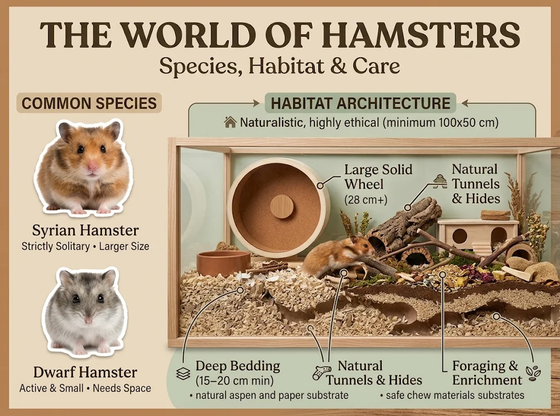

Understanding proper hamster care and habitat requirements is essential for keeping these small rodents healthy and active. Hamsters are small crepuscular rodents native to desert and semi-arid regions across Europe and Asia. As popular companion animals, their natural instincts must be respected. The most common domestic species include the larger, strictly solitary Syrian Hamster (Mesocricetus auratus) and smaller dwarf species such as Roborovski, Campbell’s, and Winter White hamsters.
Modern Guidelines for Hamster Care and Habitat
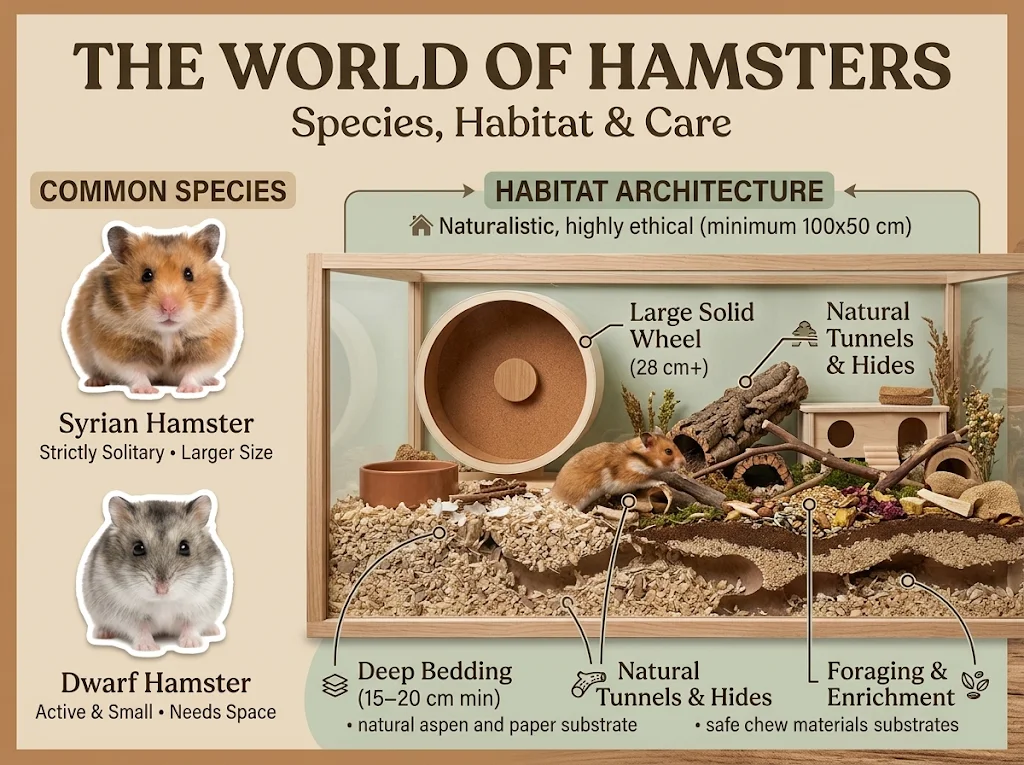
Providing an appropriate enclosure is crucial for a hamster’s physical and mental well-being. Contrary to traditional small cages, modern ethical care standards require continuous floor space (minimum 100 x 50 cm) with deep bedding (at least 15–20 cm) to allow natural burrowing behavior. Furthermore, an appropriately sized solid running wheel (28 cm+ for Syrians to prevent spinal curvature) and multiple hideouts mimic their wild burrowing environments effectively.
Diet, Dental Health, and Stress Prevention
In addition, a balanced diet consists of a high-quality species-appropriate seed mix supplemented with fresh vegetables, protein sources, and safe chew materials for dental wear. Since hamsters are prey animals, recognizing subtle stress signals—such as bar chewing or pacing—allows owners to adjust environmental enrichment. As a result, maintaining optimal hamster care and habitat conditions ensures a low-stress, healthy life for your pets.
Official Hamster Care & Welfare Guides
- Wikipedia – Hamster Complete Information:https://en.wikipedia.org/wiki/Hamster
- RSPCA (The Royal Society for the Prevention of Cruelty to Animals) Pet Advice:https://www.rspca.org.uk/adviceandwelfare/pets
- PDSA (People’s Dispensary for Sick Animals) Hamster Guide:https://www.pdsa.org.uk
- Blue Cross UK Hamster Care & Wellbeing Advice:https://www.bluecross.org.uk/advice/hamster
I almost cried while reading this content.
Truly informative and great content